Floral Teas: 9 Flowers Used for Tea and Homemade Tea Blends

Homemade floral teas are one of the easiest ways to add new flavours, colors, and exciting aromas to your daily rituals and homemade tea blends. While herbs often bring earthy aromas or minty notes, flowers can add anything from tart fruitiness to delicate sweetness, turning an ordinary cup of tea into something a little more special.
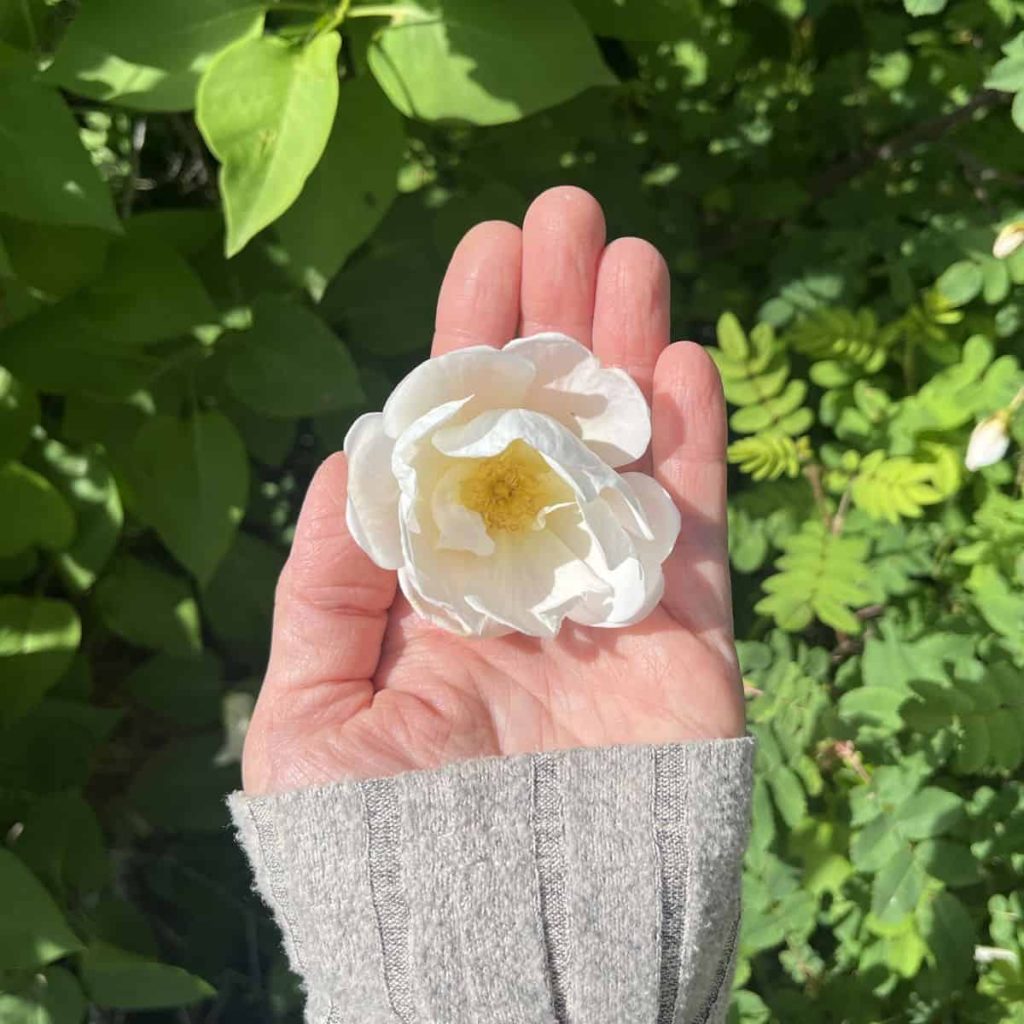
Some flowers, such as chamomile or hibiscus, are delicious and potent on their own, while others are best when paired with other herbs or loose-leaf tea.
What Are Floral Teas?
Floral teas are infusions made with solely a flower or a blend that includes petals, buds, or whole flower heads. The flowers give the blend a more floral flavour than plain herbs give. Flowers are perfect for combining with either herbs or true teas (Camellia sinensis).
Can You Use Fresh or Dried Flowers?
Like steeping a herbal infusion, for homemade floral teas, you can use both fresh and dried petals of flowers, buds, or flower heads. If you want a pure flower flavour, use only petals. The stems and leaves of flowers will give some herbal notes. For the same reason, if you buy flowers for tea, the pure petals will have a higher price than whole flower heads, for example.
Short on time?
Pin it for later!
Always Choose Safe and Edible Flowers for Tea
Before eating or infusing any flowers, always make sure they are edible. Some flowers might have several varieties, some of which are edible and others not. If you are unsure, don’t start with the flowers straight from your garden but from a teashop instead. Choose food-grade or organically grown flowers to avoid the majority of pesticides used on decorative flowers.
How to Steep Floral Teas
Flower tea blends can be steeped the same way as herbal teas. Measure a few teaspoons of floral blend per person into an infuser or a teapot, and pour 250ml (one cup) of almost boiling water on top.
If your blend includes loose-leaf teas, steep according to the ingredient that needs the lowest temperature to avoid any bitter taste in the tea. For example, if you have a jasmine green tea blend, steep your tea at around 80°C (176°F), which is perfect for green tea. When making iced jasmine green tea, one good option is the use the cold-brew method to give a more soft flavour and avoid the bitter notes completely.
| LEARN MORE: How to make cold-brewed loose leaf iced teas
Download my simple tea-making cheat sheet if you want to quickly know the measurements, temperatures, and steeping times for any tea and to not feel overwhelmed.
LEARN MORE: How to brew a perfect loose-leaf tea
Three Types of Flower Tea
You can have three types of flower teas:
- Flower-only herbal infusions
- Flower and herb blends
- Flower blended with true tea
Most commonly, flowers are paired with either herbs or true teas rather than served alone. Some flowers, like chamomile and hibiscus, are known best as single-ingredient infusions for specific occasions, like for sleep time relaxation or for an immune boost.
9 Flowers Used for Tea Compared
There are plenty of flowers to pick from, but here are nine of my favourites for your floral tea blends: hibiscus, chamomile, jasmine, lavender, calendula, rose, blue mallow, echinacea and elderflowers.
In the chart below, you can glance through the flavour profile, the best to blend with, and for what kind of tea or infusions the flowers are best to use for.
| Flower | Flavor Profile | Best Blends With | Best For |
|---|---|---|---|
| Hibiscus | Tart, cranberry-like | Mint, citrus, rose hips | Fruity, refreshing teas |
| Chamomile | Sweet, apple-like | Lavender, mint, lemon balm | Gentle evening blends |
| Jasmine | Delicate, fragrant | Green, white & black tea | Light floral teas |
| Lavender | Floral, herbal | Earl Grey, chamomile, vanilla | Aromatic blends |
| Calendula | Mild, slightly earthy | Green tea, chamomile | Brightening tea blends |
| Rose | Sweet floral | Black tea, hibiscus, cardamom | Romantic floral blends |
| Mallow | Mild, earthy | Mint, lemon balm, hibiscus | Color-changing teas |
| Echinacea | Earthy, woody | Peppermint, elderflower, lemon | Healing herbal teas |
| Elderflower | Light, honeyed floral | Lemon balm, berries, hibiscus | Fresh summer blends |
Hibiscus Tea: Tart and Fruity
Hibiscus is a beautiful flower with deep red petals, and it gives a perfect tart flavour to both hot and cold infusions.
Hibiscus Tea Blend Ideas
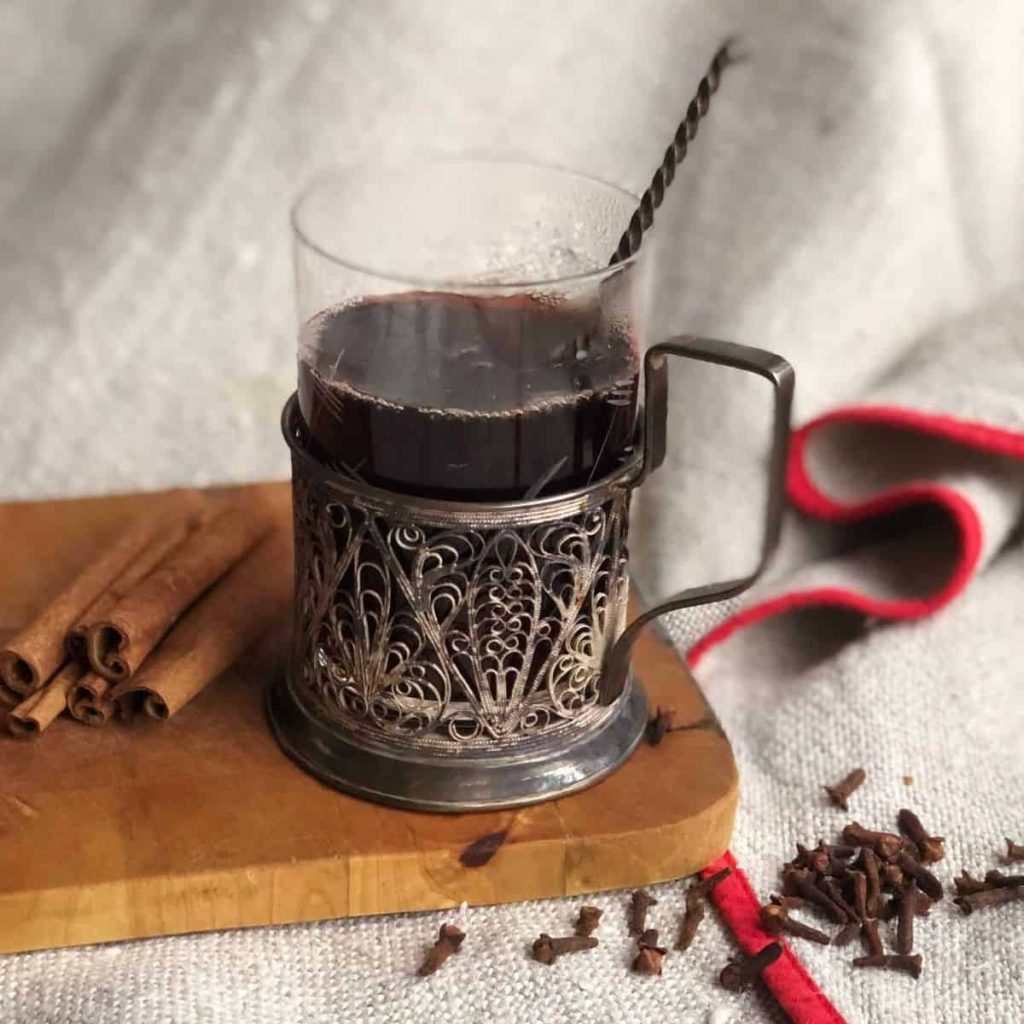
Infuse hibiscus with other herbs such as mint, or mix with dried citrus peel or rose hips for fruity teas. I personally love to blend hibiscus with blackcurrant juice, brown sugar, ginger slices, and dried spices such as cloves to make a warm and strong-flavoured infusion, a Nordic glögg with hibiscus.
For a summer cooler, blend homemade blueberry simple syrup with hibiscus, add some lemon juice and elderflower juice and you’ll have a vibrand colored iced tea with hibiscus!

Chamomile Tea: A Gentle Evening Favorite
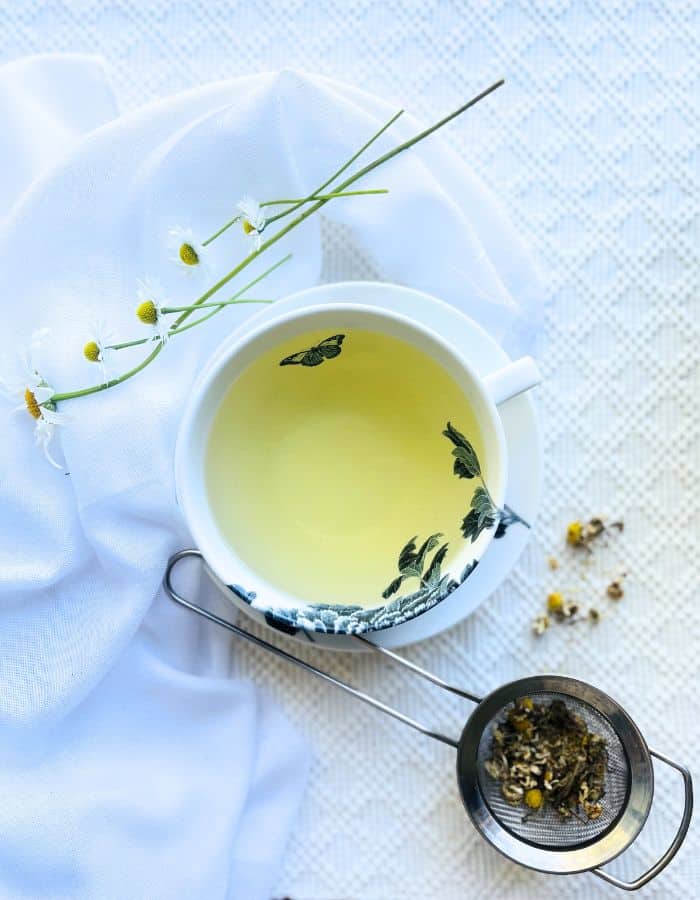
Chamomile is maybe the most well-known sleep time friend, for it calms us down. Since I told my husband about chamomile’s tranquilizing effect, it has been his go-to evening beverage when he feels that the day has been a bit much. I love sipping with him the slightly apple-like-flavoured chamomile infusion and cozying up before bedtime.
Blend Ideas for Chamomile
If I do our sleep time tea pot blend for us, I might pair chamomile with mint or lavender.
TRY THIS: Rooibos Gingerbread Tea with Chamomile
Little Prayer Tea has some beautiful ideas on how to enjoy chamomile and what to mix with it if plain flower is not your favourite.
Jasmine Flower Tea: Delicate and Fragrant
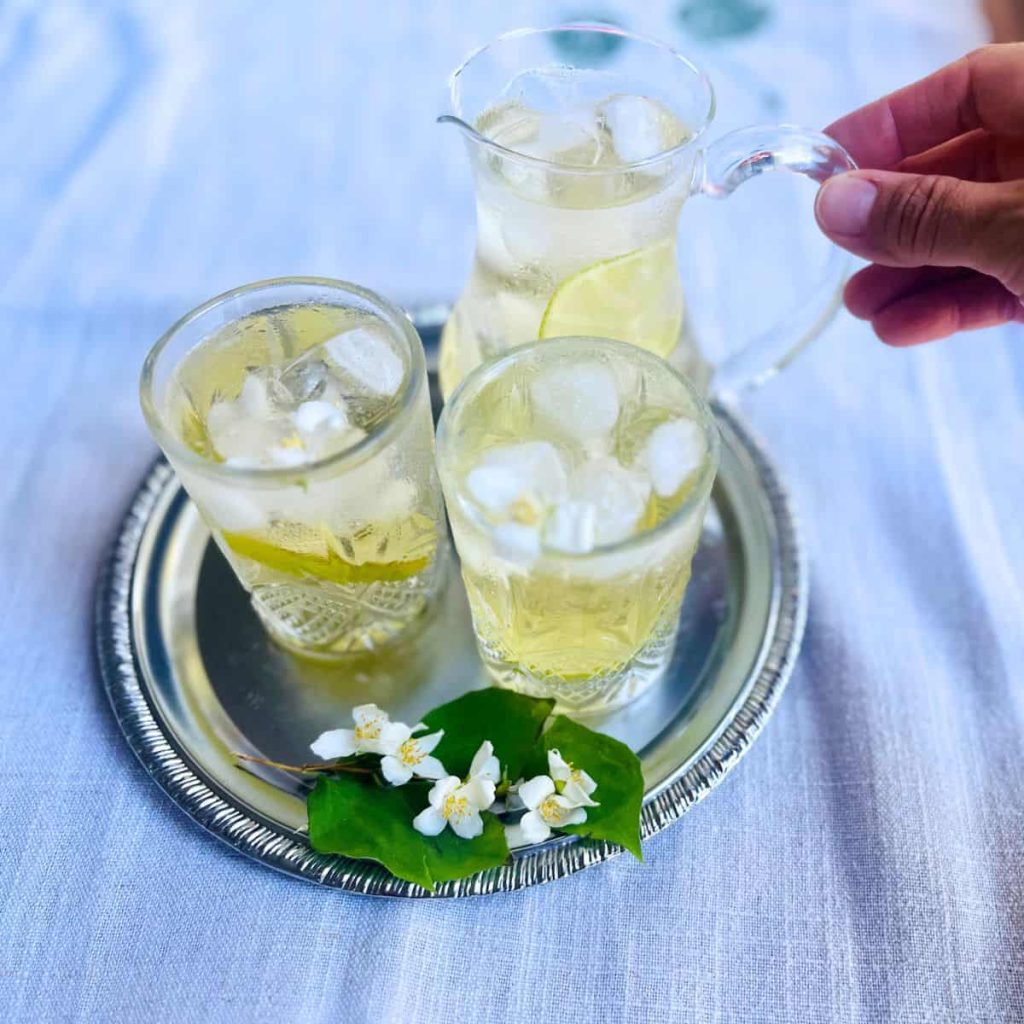
The white, delicate flower of jasmine was actually at some point my father’s favourite, and I did not get the idea of floral and fragrant jasmine at all. Now, when I drink it combined with black tea or green tea, it gives a more subtle and less perfumed flavour. Jasmine and green tea make one refreshing, summery jasmine iced tea, by the way!
LEARN MORE: Mastering the loose-leaf iced tea at home (+ FREE cheat sheet)
Generally, jasmine flower tea is blended with loose-leaf teas like black and green tea, which I mentioned already, and not just by itself. For a light and fragrant tea blend, combine jasmine flowers with loose-leaf white tea.
Lavender Tea: Relaxing Aroma
The beautiful relaxing aroma and fragrance are some of the reasons why lavender is so well known as a decorative plant, and perfect in perfumes and creams, like in my trusted lavender lip balm, but lavender is so much more! In culinary use, lavender is amazing in freshly baked madeleines as well as in teas and infusions.
Tough beautiful color of lavender does not give color to the infusion, the calming effect and scent are a powerful pair for any sleep time infusions. Pair with chamomile, vanilla, mint, or mix with some black tea, or enhance an existing tea blend such as Earl Grey.
Rose Tea: Sweet and Elegant
If you want a special sweet, fragrant, even slightly romantic tea blend, adding some roses will do the trick. The floral tea blend with dried rose petals and loose-leaf black tea is a beautiful gift visually and flavour-wise.
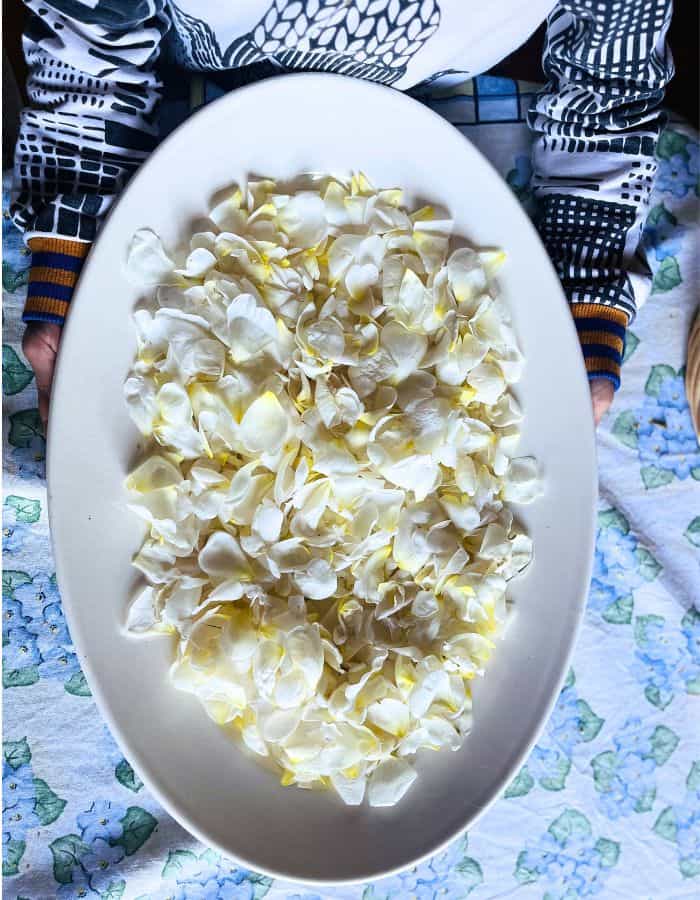
A hint of rose petals in winter tea blends will lighten the flavor profile and deepen it. Try for example a a winter herbal tea blend with some hibiscus and rose petals, cloves, and dried orange peel, for example, for a wintery flower infusion.
Calendula Tea: Sunshine in Your Cup
My mother adds a few calendula petals to the bottom of the cup before pouring a steeped tea. She says she has the “sun in her cup,” which is quite true with the bright orange petals shining from the bottom of her teacup.
Sunny orange colored calendula is a useful plant, specifically in balms and salves, due to its healing properties. Though it is less commonly used in tea blends, it gives summer vibes and brightens any tea blend. Calendula has a mild and earthy flavour, so it is easy to pair with, for example, chamomile or green tea.
Short on time?
Pin it for later!
Blue Mallow Tea: Flower That Changes Color
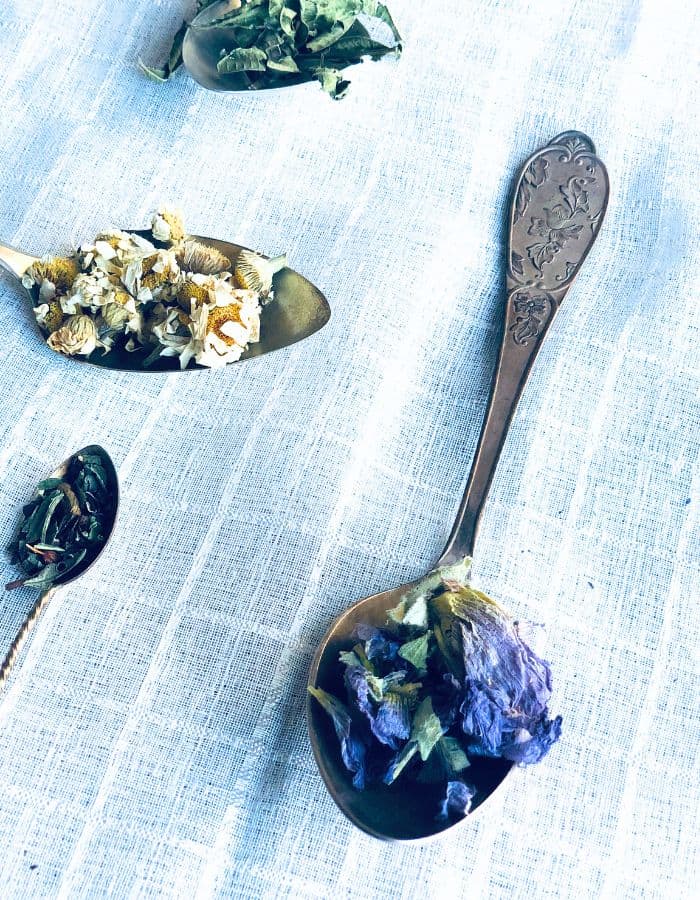
One of my favourite thing about flower teas are the different colors compared to plain herbal teas. The flower tea of blue mallow is like magic. When infused, the mallow flower tea first has a beautiful blue color. Then suddenly it changes into a regular colored herbal tea. Mallow flowers also give beautiful hues for tea-dyed Easter eggs, not just infusions!
Blend Ideas for Blue Mallow
Enjoy mild and earthy blue mallow petals alongside lemon balm and mint, or make a colorful flower tea blend with hibiscus petals.
Echinacea Tea: Earthy and Healing Floral Tea
Echinacea is your friend during the flu season when you need an immune boost. Echinacea tea is one of the natural ways to soothe pain and aches when your throat is hurting. Wintertime echinacea tea creeps onto my December bucketlist with other natural cold remedies every single year.
On the side of tea, echinacea can be turned into a healing echinacea tincture to fight the flu.
How to Brew Echinacea Tea
Echinacea makes a beautiful pink-red-coloured tea that is simple to steep: Add a few teaspoons of echinacea petals, pour 250 ml (one cup) of almost boiling water on top, and let it steep for about 5 to 8 minutes, or if you want it stronger, let it brew in a kettle on a stove up to half an hour.
I am thinking about using it to create a flavourful and refreshing red iced tea recipe. What do you think? Let me know in the comments at the end of this post your thoughts!
Elderflower Tea: Light, Honeyed and Fresh
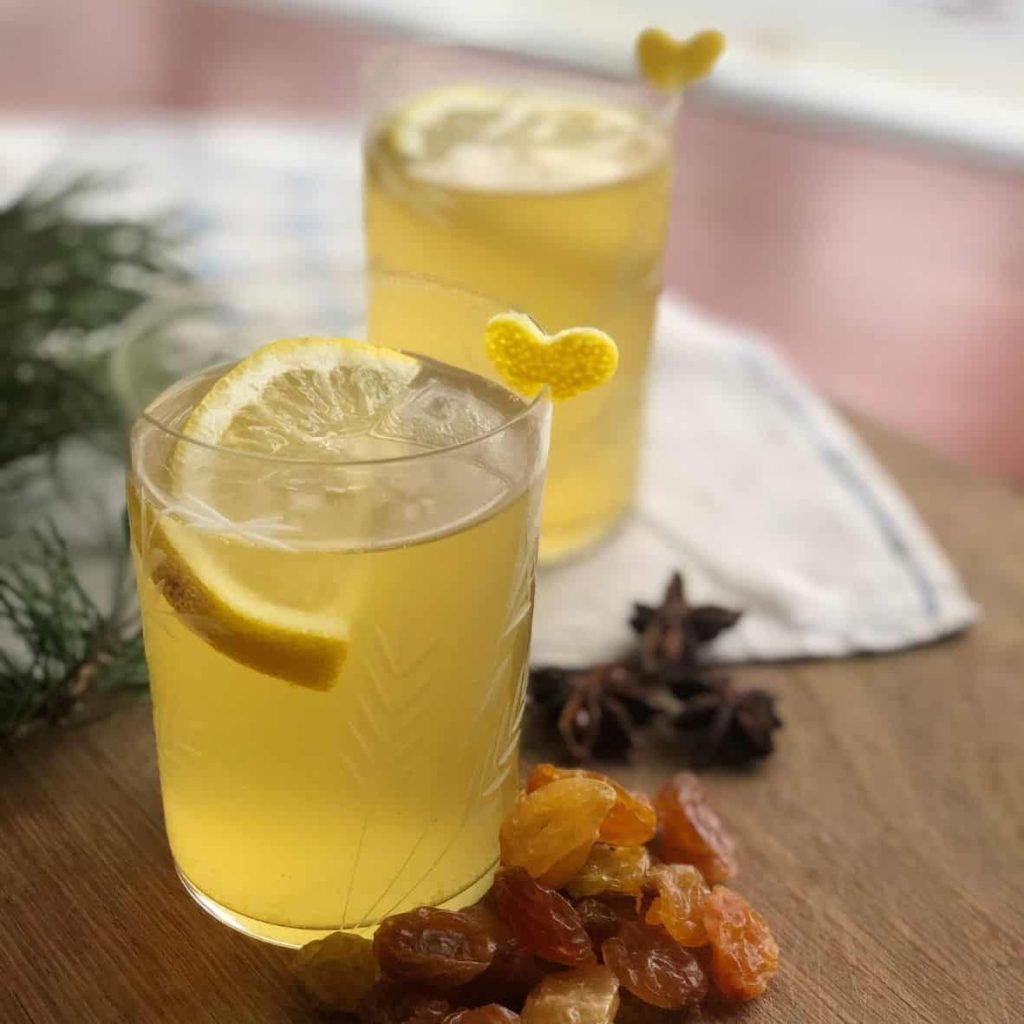
Elderflower makes wonderful beverages, too, and is one of my favorite flowers to include in homemade tea blends. Petals of elderflower give a honey-like flavour to your infusions, and I especially love to combine the juice from them with citrus and spices to make a White Glögg with Elderflower.
Did you know?
Elderflowers and elderberries come from the same plant but are harvested at different times of the year. Elderflowers are picked in late spring to early summer for teas, cordials, and floral blends, while the ripe berries are harvested later in the season and are commonly used in syrups, jams, and warming drinks.
| TRY THIS: White Glögg with Elderflower
Harvesting & Drying Flowers for Your Own Tea Blends
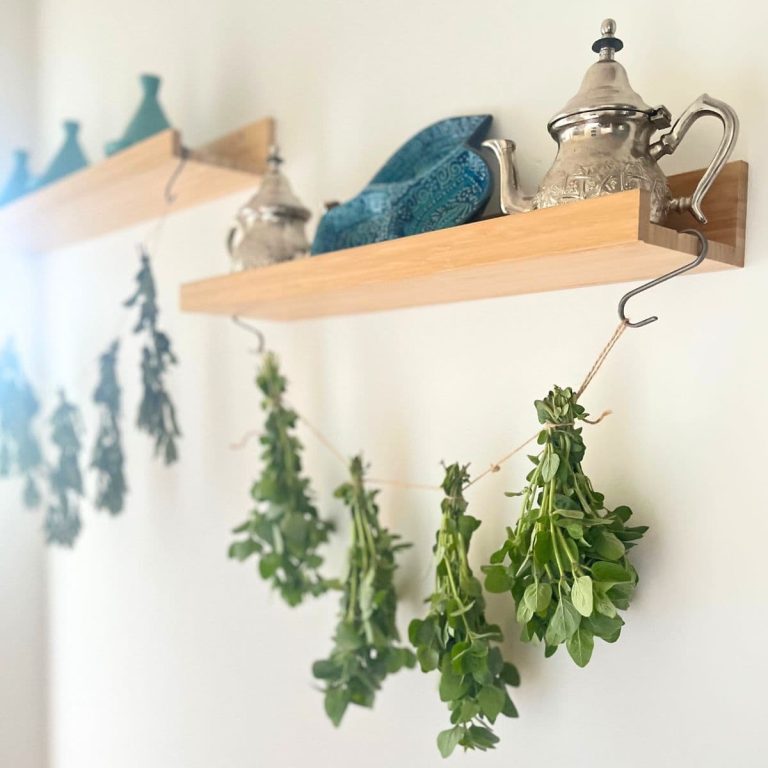
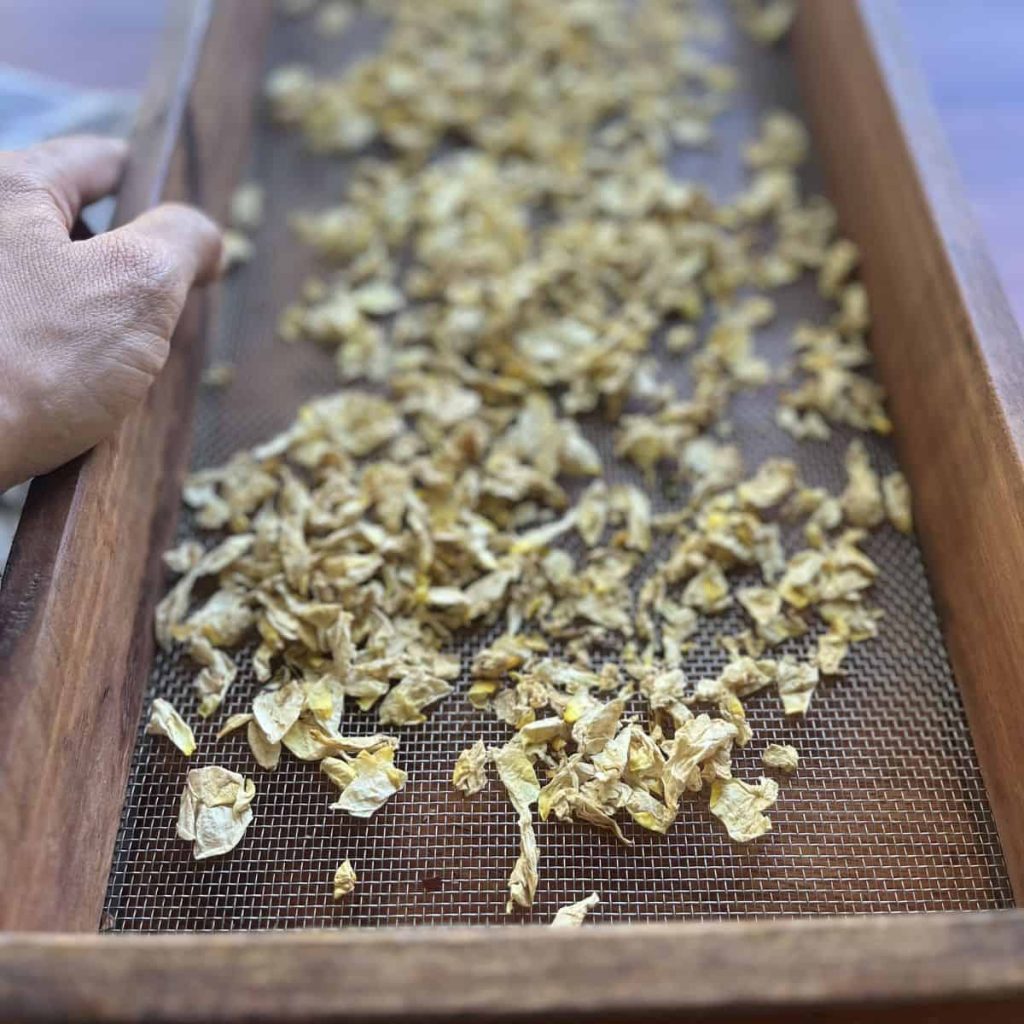
Like when harvesting herbs, the best time to harvest flowers for floral teas is in the sunny morning when the damp of the morning has passed, and the flowers are not wet. Dry in bouquets that you hang downwards, or tear the petals off and dry flat on a slightly airy surface. I use trays or a big sieve and turn them around a few times a day to prevent them from molding and to let them dry evenly.
| LEARN MORE: Dry Herbs for Tea – Naturally
Storing Dried Flowers for Floral Teas
When flowers have completely dried, store them airtight in a glass jar in a cool and dark place.
| TRY THIS TOO: Blackcurrant leaf tea: How to dry, store and steep