Low Caffeine Tea: Which Teas Have the Least Caffeine?

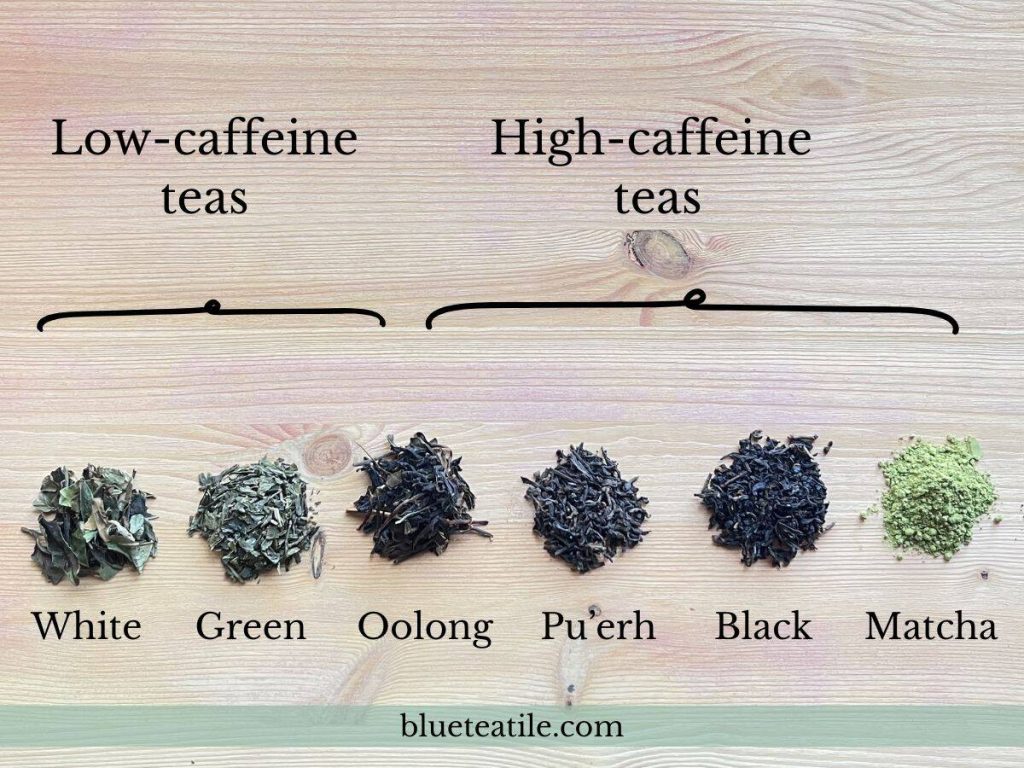
Low-caffeine teas are a gentle way to enjoy a cup of tea without overstimulating your day. All true teas (herbal varieties aside) contain theine, the natural caffeine in tea, with a typical cup ranging from 15–70 mg, less than a regular coffee at about 100 mg or more. Choosing the right tea matters: white and green teas usually have the least caffeine, while black and pu’erh teas have more. There are a few simple ways to reduce caffeine, also at home in our tea cup, so let’s dive deeper.
Gentle Energy With Tea: Why Caffeine Levels Matter
Many tea drinkers want a subtle, gentler energy that aligns with their slower, natural way of life, without sharp peaks or crashes. Paying attention to caffeine is helpful when it starts disrupting your daily rhythm, whether it’s Caffeine Awareness Month or just a regular Tuesday.
Tea contains theine, the caffeine in tea, which gives a calmer, smoother energy than coffee. If you want to explore how to balance energy with both tea and coffee, my post Theine vs. Caffeine dives deeper into caffeine levels, the differences between drinks, and the best times to enjoy them for a steady daily rhythm.
| RELATED: 3 Natural Systems to Balance Energy Naturally
In this post, we’ll explore
- Which teas are naturally caffeine-free
- What are the low-caffeine teas
- How tea processing affects caffeine content
- How to reduce caffeine in your cup
- Caffeine amounts in different tea varieties
Disclaimer: This post may contain affiliate links, which means if you click on a product or a service and decide to purchase it, I may receive a commission at no extra cost to you. For more information, you can read my full disclaimer.
What Is Considered a Low-Caffeine Tea?
Low caffeine tea is generally considered to be under 40 mg per cup. According to some studies, white tea and green tea truly contain less caffeine, so these teas fit into the low-caffeine category:
- Green tea: 30–50 mg
- White tea: 6–55 mg
Watch Out for Matcha Caffeine
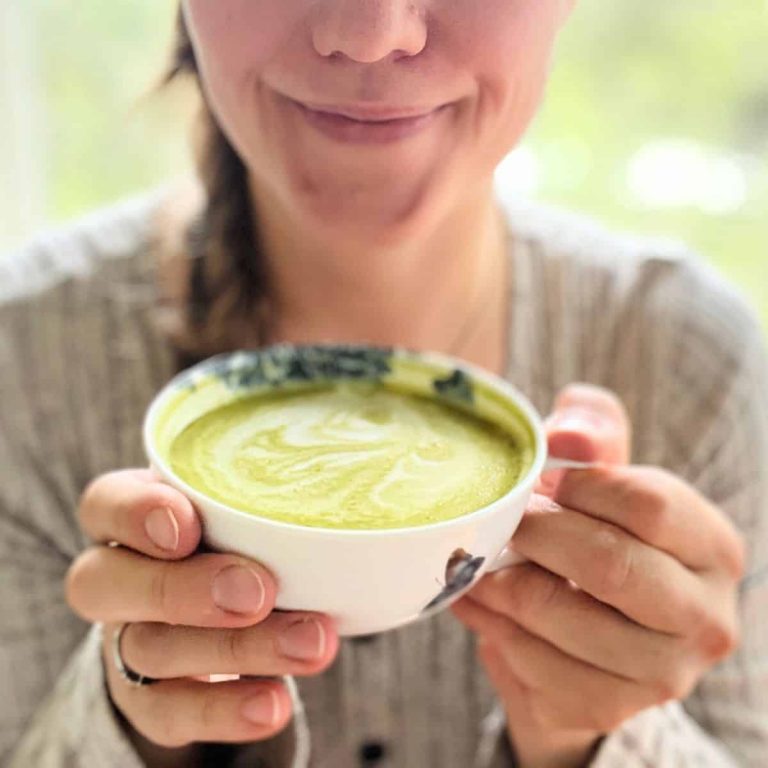
Matcha is tricky. One gram contains about 20–45 mg caffeine, but typical servings are 2–4 grams per cup. That means a single cup can contain 40–180 mg, easily matching or surpassing black coffee.
That’s not bad, but maybe you want to skip the matcha before bedtime, right? Sip your vanilla matcha latte as a morning or midday treat, like I do.
| TRY THIS: Japanese Matcha Traditional Starter Set
Caffeine Comparison: Different Types of Tea
All true teas come from the Camellia sinensis plant. White, green, black, oolong, and pu’erh are processed differently, resulting in diverse flavors and caffeine levels, and the different types of teas.
Short on time?
Pin it for later!
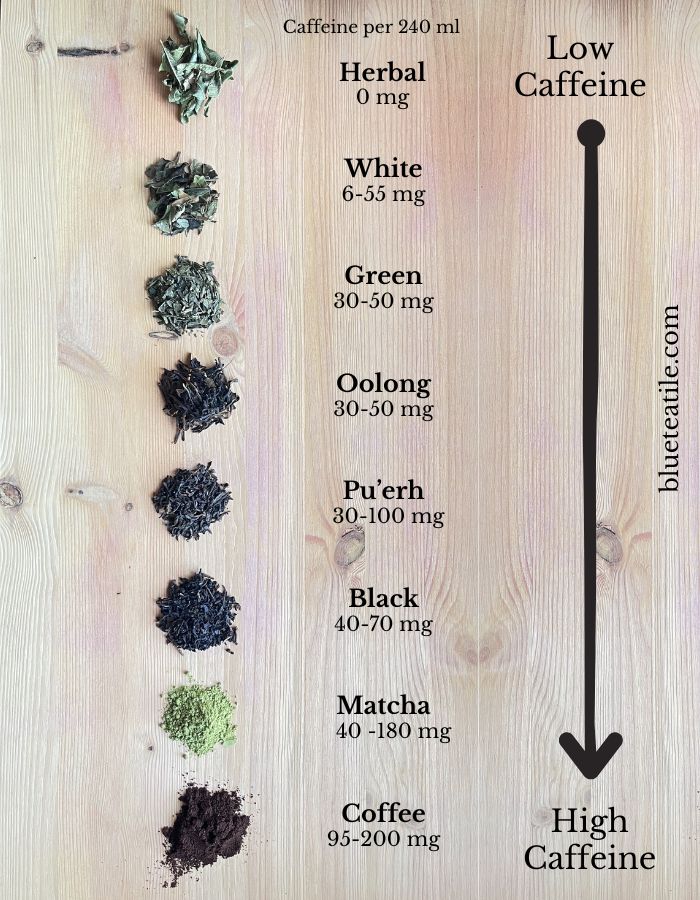
This chart uses a tea-to-water ratio of 1 tsp to 240 ml / 8 oz serving sizes and the ideal steeping times and water temperatures for each tea type. There is also herbal tea with 0 mg of caffeine and coffee with 95-200 mg of caffeine in the chart for comparison. For easy application, I have also marked the best time to enjoy the tea depending on the caffeine level.
| Tea | Caffeine per 240ml | Level | Best Time |
|---|---|---|---|
| Herbal tea | 0 mg | None | AM / PM |
| White tea | 6–55 mg | Low | Noon |
| Green tea | 30–50 mg | Med | AM / Noon |
| Oolong tea | 30–50 mg | Med | Noon |
| Pu’erh | 30–100 mg | Med / High | AM |
| Black tea | 40–70 mg | High | AM |
| Matcha | 40–180 mg | High | AM |
| Coffee | 95–200 mg | High | AM |
Beware of Caffeine Content Markings
When checking caffeine labels, keep in mind that producers may report it in different ways or not at all:
- Per gram of dry tea
- Per prepared cup
To compare teas accurately, note:
- How many grams are in a teaspoon or tablespoon
- Whether you use one or two spoons per cup
- The actual liquid volume (our chart assumes 240ml / 8oz per cup)
If a producer doesn’t clarify cup size, it’s best to be cautious when comparing with other teas — otherwise, numbers can be misleading.

Dive Deeper: Caffeine Content in Specific Teas
If you’re curious about caffeine levels in individual tea varieties, I recommend reading the book Tea: History, Terroirs, Varieties. It includes biochemical analyses of 35 teas with charts showing caffeine concentration in different infusions. The book also covers tests on how steeping times affect caffeine. I’ve reviewed it in my post on the best books about tea — it’s one of my go-to references in my tea library!
Lowest Caffeine True Teas You Can Try
Some traditional teas are naturally lower in caffeine due to older leaves, stems, or roasting processes.
Genmaicha (Green Tea with Roasted Rice)
Roasted rice adds a nutty aroma while diluting caffeine concentration. It was at my friend’s home that I first tried Genmaicha. The amazing roasted nutty scent and aroma of Genmaicha is something incomparable to other teas and makes it truly unique.
Kukicha (Twig Tea)
Made mainly from stems and twigs, giving a gentle, nutty taste.
Bancha (Later Harvest Green Tea)
Uses older leaves, making it perfect for daily drinking. Bancha is one of the first green tea varieties I learned when I understood that there is not just “green tea” but plenty of different green teas!.
Hojicha (Roasted Green Tea)
Roasting reduces bitterness and creates a naturally sweet, toasty flavor.
Pai Mu Tan (White Tea)
Made from buds and young leaves; delicate flavor is naturally low in caffeine. I fell in love with Pai Mu Tan (White Peony) when I was still working at a fine dining restaurant and serving it for the customers, and of course, steeping some for me too!
Short on time?
Pin it for later!
Herbal Teas: Naturally Caffeine-Free
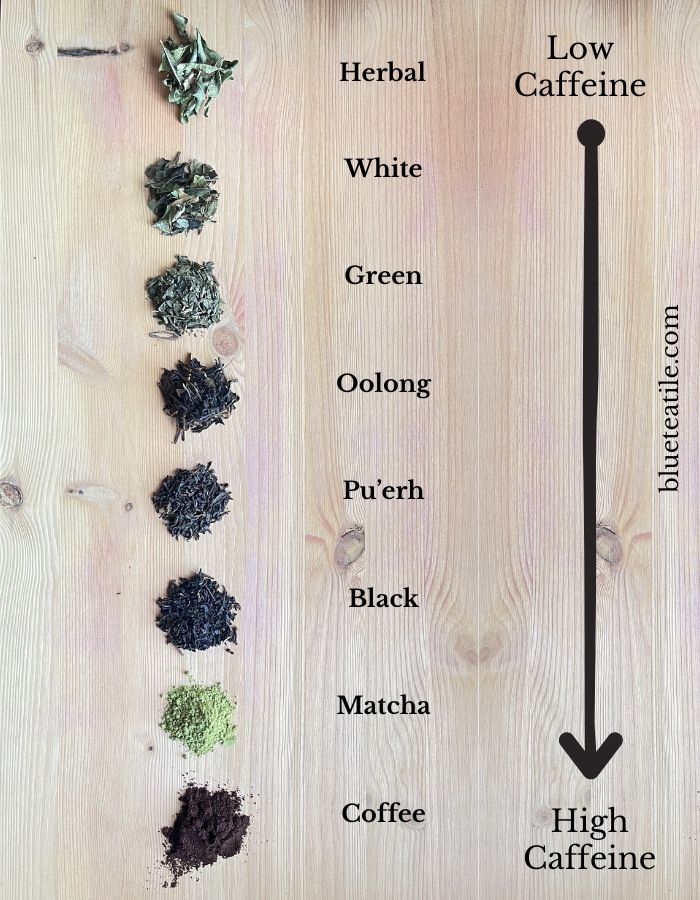
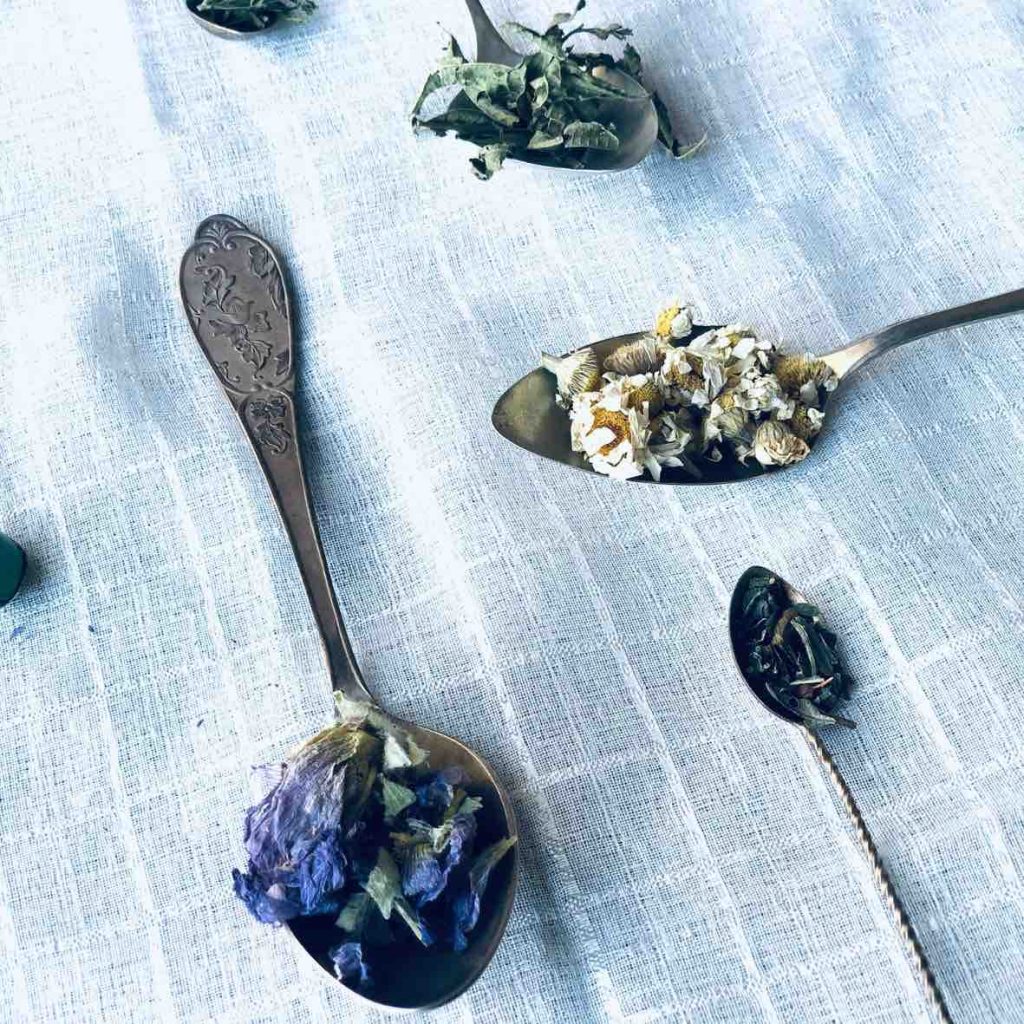
Herbal teas, or tisanes, do not contain caffeine: chamomile, peppermint, rooibos, lemon balm, and hibiscus are popular choices. One exception tough is Yerba Mate: Yerba Mate contains caffeine naturally (~70 mg per cup depending on preparation). It provides sustained energy without sharp spikes and is a traditional South American ritual.
| RELATED: How to brew herbal tea
Factors That Affect Caffeine in Tea
Caffeine varies based on:
- Leaf age (young vs mature)
- Harvest season and shade growing
- Processing method (roasted, fermented, oxidized)
- Brewing temperature and steep time

How to Brew Tea With Less Caffeine
Caffeine levels in tea vary naturally depending on several factors:
Leaf age
Younger leaves and buds usually contain higher caffeine, while older, mature leaves have lower caffeine.
Harvest season and shade growing
Spring and shaded teas often have more caffeine; later harvests and fully sun-grown leaves tend to be lower.
Processing method
Oxidized and fermented teas like black tea and pu’erh generally have higher caffeine, while roasted or lightly processed teas like hojicha and bancha have lower caffeine.
Steeping temperature and time
Hotter water and longer steeping extract more caffeine, while cooler water and shorter steeps extract less.