How to Plan Your Week Around Your Natural Energy

What if your weekly plan started with your energy rather than everything you need to get done? When you plan your week around your energy, not your time, you suddenly get things done and can plan fewer things when you don’t need to carry unfinished tasks from one week to the next and have to plan them all over again.

I love to plan and make all decisions for the week ahead on Sundays to minimize decision fatigue during the week. Choose the day that fits your rhythm: it can be Monday, Friday, or whatever day naturally works for you.
Don’t plan the week you wish you had the energy for. Plan the week you actually have the energy for. You don’t need a complicated system. Give yourself 10 minutes once a week to look at the week ahead, notice your energy, and build a week that feels manageable.
Use my simple week planning method:
- Notice when your energy peaks and dips: what worked or did not last week.
- Place natural movement and recurring anchors first.
- Protect sleep and rest to keep you up and running.
- Support your energy throughout the week
- Edit your weekly plan until it is realistic, and you have breathing room.
| READ MORE: 3 Natural Systems to Balance Your Energy
Your 10-Minute Natural Energy Weekly Plan
Set a time frame to not overdo it. The point is to repeat this weekly, to make it easy and not to make a big, huge task that you never want to do again. So use my simple week planning method, these five steps, and set a timer for 10 minutes.
Give each step 1-2 minutes only:
- 2 min — Notice
- 2 min — Place
- 2 min — Protect
- 2 min — Support
- 2 min — Edit
If you need a little longer at first, that’s okay. The goal is not to plan perfectly, but to build a simple habit you’ll actually repeat.
Remember that next week you know better, and you can tweak it a bit more every upcoming week.
1. Notice: Find your natural energy rhythm
Every good plan needs some data to be built on. So before planning the new week, take a quick look back.
Ask simple questions like:
- What felt good last week?
- What felt heavy?
- When did I naturally have the most energy?
- When did I tend to slow down?
Your energy has natural rhythms, and learning to notice them can make weekly planning much easier. You may notice repeating patterns within your day, across your month, or even with the changing seasons of the year.
Look back before you plan ahead
These observations are your starting point when planning the week ahead. You don’t need to change your energy or make every week look the same. Just notice what your energy is telling you.
If you need a little more help tuning into your natural energy, my post Find Your Energy Rhythm, will help you get started.
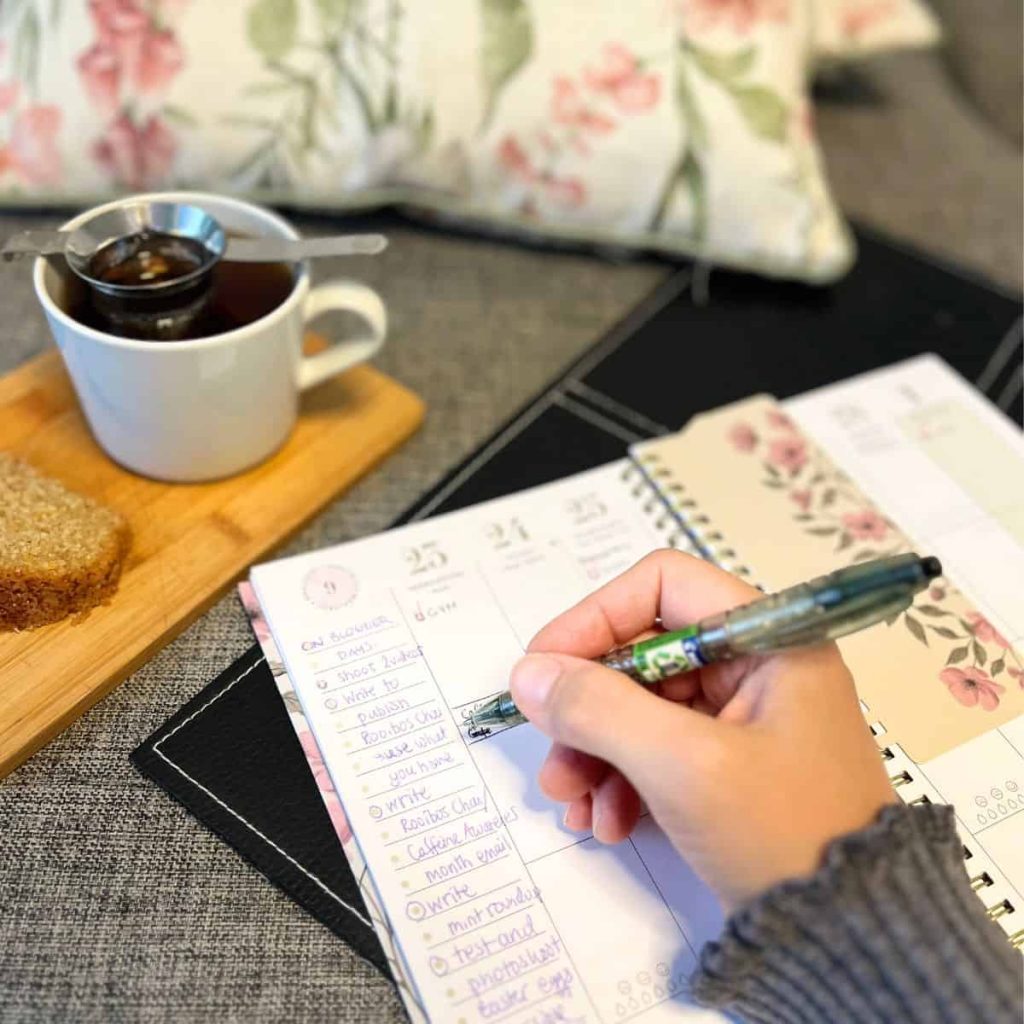
Short on time?
Pin it for later!
Notice your daily and monthly rhythms
Your monthly cycle can be another useful rhythm to pay attention to when planning your week. You may need to plan fewer things during some weeks. No need to expect the same energy level every week, nor the same output.
My example:
When I reflect on the past week, I look at things in my plan that I did not do and why. Too much planned? Something unexpected happened? When I did not sleep or eat enough, did it affect my day? During the luteal phase of my cycle, I often drop my tasks roughly in half and plan more self-care, alone time, and walks to balance and support my energy.
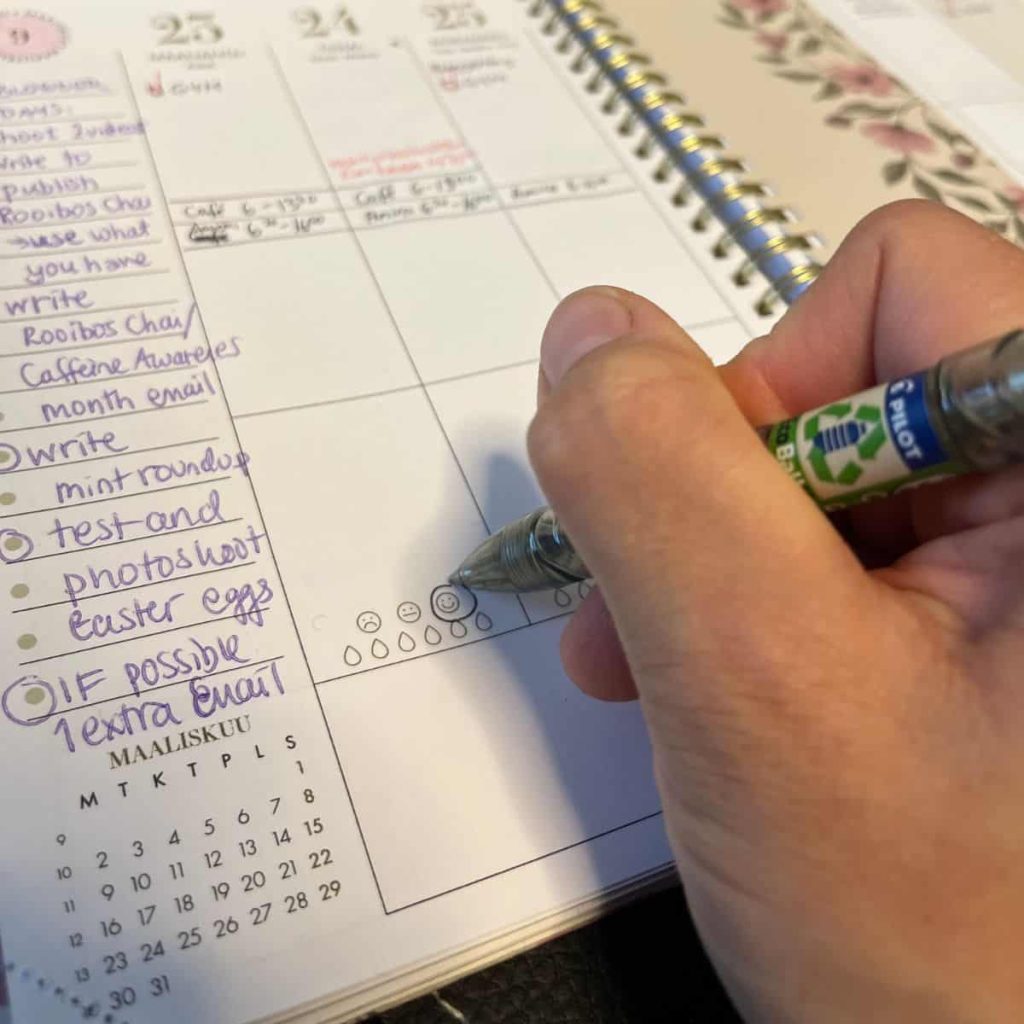
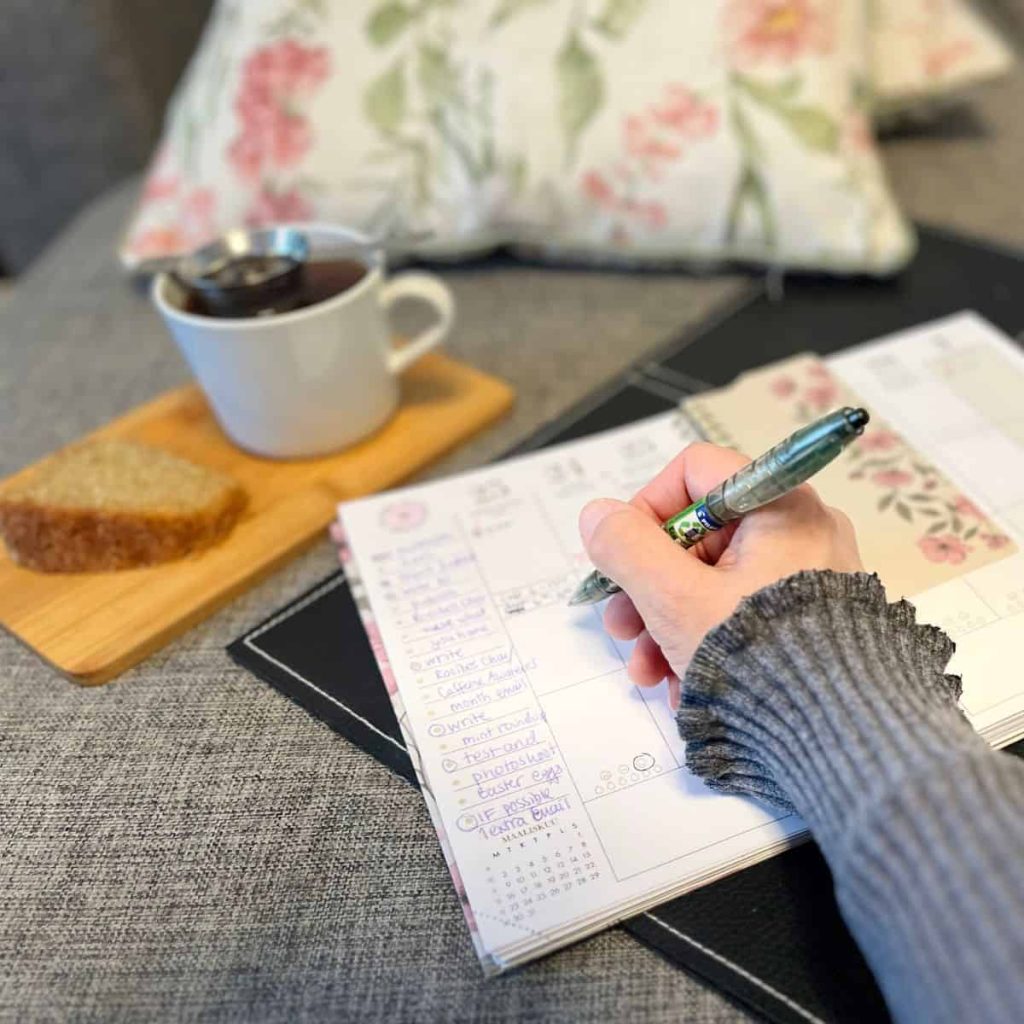
I love the Burde Life Planners, that I have had for a few years now. There are tiny images to mark down the feelings of the day, and follow the cycle too. Those are helpful marks later on when you look back your days, weeks and months to understand your capacity, energy and mood.
2. Place: Schedule what supports your energy
Next, start building the actual week. Start with the most important things first: Put the things that support your energy into your calendar before filling every available space.
You can use a calendar, physical or digital, though I suggest going old school first and using pen and paper before going digital to get the idea of your weekly rhythm. You can also download my homemaking schedule, which is simply divided into three daily blocks (morning, midday, evening), and use it as a base to plan out.
Anchor in your movement first
To support natural energy, I tend to recommend that you start by placing time for important things like movement first. When you anchor in things that give you energy in the long run, you will create a supporting system, and not just a random weekly schedule.
The point isn’t to create an impressive workout schedule. Choose that you cycle to work twice this week, or that you go hiking instead of a movie marathon on a couch this weekend. Make movement part of the week before everything else crowds it out.
Add your fixed commitments
On the side of movement, add any other recurring weekly commitments (like this weekly planning you are doing right now) that you want to save some time for, or any family commitments that are at certain times. Where you have a choice, match energy-demanding tasks with your higher-energy times.
Once your anchors are in place, fit in the things that actually need to happen this week.
Repeat what works
When you notice that something consistently helps your week run smoothly, make it a repeating anchor.
For example:
- The regular gym slots
- A weekly walk
- A regular planning moment on Sundays
Once those anchors are in place, it’s so much easier to fit everything else around them. And then notice what doesn’t work. Tweak it next week to create a realistic, liveable, and lighter week.
My example:
I start by placing in the weekly schedule the work times that I cannot move, then I place in three weekly recurring time slots for movement. When I can, I plan the movement straight when I wake up or straight after work, so that I will be moving before my head tells me not to.
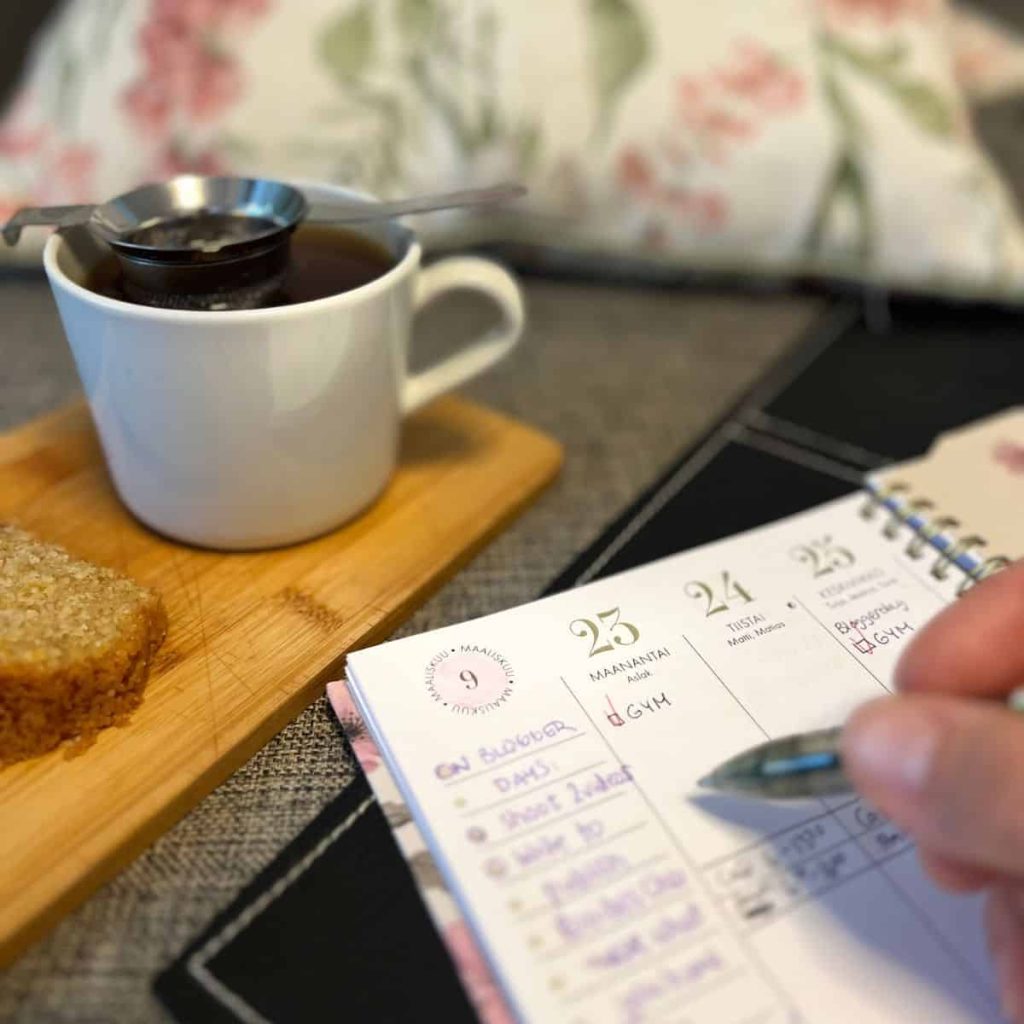
After that, I plan the rest of my working hours around those times, keeping in mind that my energy is best from 5 am to 1 pm, and around 2 pm, my focus drops significantly. So after 2 pm, I place into my weekly plan running any errands, meeting friends, and going outside with our daughter to hike or play.
3. Protect: Make room for rest
Don’t leave the rest to whatever time happens to be left over. Put it into the plan, too.
Think about these:
- Your regular bedtime and enough sleep
- A slower evening with a cup of herbal tea
- An hour without screens before bed
- Space for a nap if you need one
- Time between commitments
- Simple white space
Protect your sleep and white space
It took me a long time to realize that rest isn’t a reward for getting everything done. It’s part of making the week doable. When you protect your rest, your energy will be sufficient for all the things you have planned to do.
To ease the bed time, make sure to decrease caffeine consumption about 5-6 hours before bedtime to help your body wind down naturally.
My example:
On the side of the repeating bedtime, I love making the bedtime easier and steeping a cup of sleep-time herbal tea. With calming herbs and a book, the winding down flows easily to bed.
During the day, when I set my daughter to nap, I intentionally leave the time and space a few times a week so that I can nap with her if it feels the better choice for the day.
4. Support: Make your week easier
When you have the weekly structure and the running errands and other tasks in place, pay attention to your surroundings and habits. When you set your environment well, you don’t need to think about it during the week.
Before the week starts, make a few things easy:
- Keep water within reach to keep you hydrated. It’s surprisingly easy to forget to drink when the day gets busy.
- Plan your caffeine-rich drinks earlier in the day and switch toward lower-caffeine teas or caffeine-free options as the day winds down.
- Keep a couple of simple things you enjoy available when you need a little lift — perhaps your quick ginger shot, or a piece of dark chocolate.
You aren’t trying to become an energy monster. Simply try to make it easier to support the energy you already have in the moments you need.
Natural energy suporters
- Low-caffeine teas
- Herbs for good sleep
- Cold plunge in the wild: Boost energy naturally
- Sauna: How to relax like Nordics do
5. Edit: Tweak until it’s realistic
As a content creator, I know how important editing is. I can always find more things I’d like to add, but the finished piece becomes better when I remove what isn’t necessary.
In the same way, it is crucial to edit your weekly plan. If you list ALL you “need” to do, you’ll have zero energy by Wednesday, and you’ll drop the whole plan, right?
Leave some breathing room
So, take a hard look at your finished weekly plan and ask: Is this actually reasonable? Will I feel drained and exhausted or light and content?
The point is not to squeeze all in. Drop less important things.
Short on time?
Pin it for later!
Think more like:
- Can I actually do this?
- Is there white space in my plan?
- What if something takes longer than expected?
- Is there anything that can be scheduled for another week?
- Which tasks can I simply remove?
Then remove the unnecessary things. Because a good weekly plan isn’t one where every hour is accounted for. It’s the one that leaves enough room for you to actually live your week and live it well.
Plan less, live more
You don’t need to create more energy to fit more into your life.
You can simply:
Notice your energy.
Place what matters.
Protect your rest.
Support yourself.
Then edit until the week feels possible.
And sometimes, planning less is exactly what helps you accomplish more of what actually matters. If you want to dig in deeper, learn these 3 natural systems to balance your energy next.